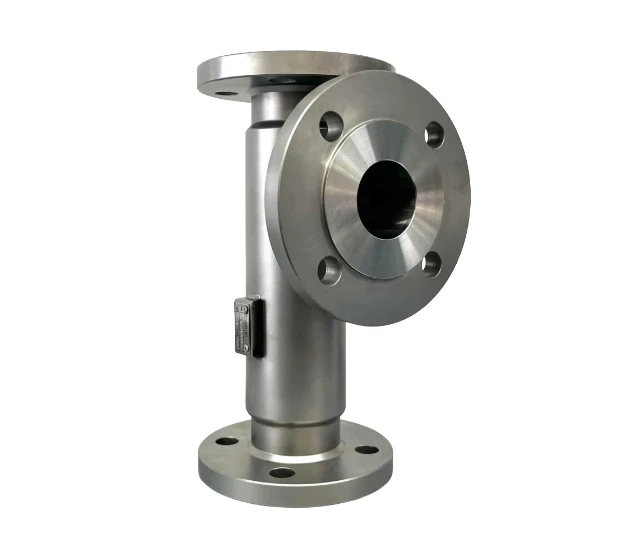
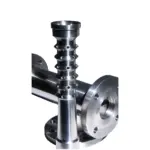
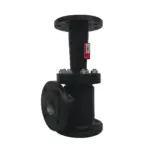
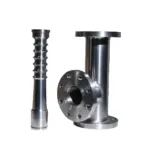
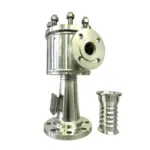
The steam jet heater for liquids to be installed in pipes is a static mixer of steam and water or other liquids.
The liquid is heated by directly mixing the steam, which condenses upon contact with the liquid, releasing its sensible and latent heat. Depending on its enthalpy and the outlet temperature of the water, each kg of steam releases approximately 550-650 kcal.
In general, the maximum temperature of the heated liquid must be at least 10°C lower than the corresponding saturation temperature.
Designed to connect directly to the water and steam lines, the heater mixes cold water and steam, instantly bringing the liquid temperature to the required values.
The heater consists of a body and an interchangeable condensation nozzle.
Inline liquid flow allows for the movement of dense fluids or liquids with suspended solids.
The flow rate of the liquid to be heated must be constant to allow for the correct sizing of the temperature control system.
This type of heater is designed to convey and mix the two flows silently and instantly, avoiding the vibrations and noise normally associated with steam condensation.
The fluid to be heated is usually water; for other cases, it is necessary to consider the heat capacity, density, and other physical and chemical characteristics of the fluid used.